
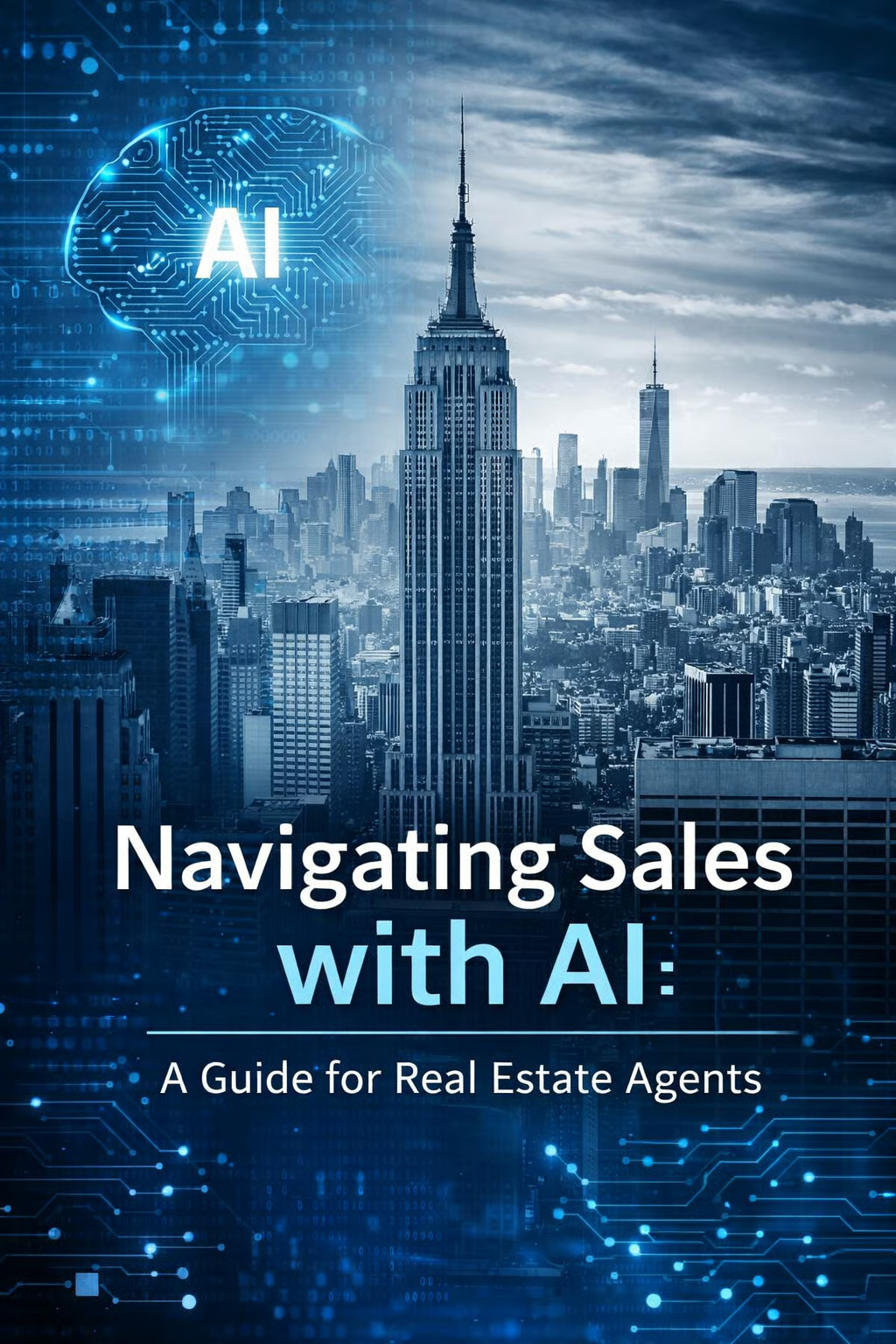


Or: How I Learned to Stop Worrying and Let the Robots Help Me Sell
Real estate has always been about people. Handshakes. Conversations. Trust. That gut feeling you get when a buyer walks into a living room and says, “This is it.” So when someone hands you a book titled Navigating Sales With AI: A Guide for Real Estate Agents, it’s natural to raise an eyebrow.

AI? In real estate?
Is a robot going to steal my listings?
Will ChatGPT replace my closing gifts with a PDF and a smiley face?
Thankfully, no.

This book doesn’t try to turn real estate agents into soulless tech operators. Instead, it does something far more useful: it shows how AI can quietly, efficiently, and sometimes surprisingly help agents sell more homes, waste less time, and reclaim their sanity, without losing the human touch that makes great agents great.
Let’s break down why Navigating Sales With AI feels less like a tech manual and more like a practical survival guide for modern real estate professionals.

The Real Estate Reality Check
Before diving into AI, the book does an excellent job of acknowledging a truth most agents live every day:
You are busy. Constantly.
Between lead follow-ups, showings, paperwork, marketing, negotiations, emails, texts, phone calls, social posts, and remembering which client’s dog is named Max (and which one bites), your day is already overflowing. Most agents don’t need “one more thing.”
They need fewer things.
This is where the book’s approach to AI immediately feels refreshing. It doesn’t say, “Here’s a shiny new system you must master.” Instead, it asks a better question:
What if AI could take the boring, repetitive, time-draining tasks off your plate so you can focus on clients and closings?
Now we’re listening.
AI Is Not the Enemy (It’s the Assistant You Never Had)
One of the strongest themes throughout Navigating Sales With AI is demystification. AI isn’t portrayed as a futuristic overlord or a magical one-click solution. It’s positioned as something much more realistic:
A very fast, very patient assistant who never sleeps.
The book walks agents through how AI can help with tasks like:
- Writing listing descriptions
- Drafting follow-up emails
- Creating social media captions
- Summarizing market reports
- Organizing leads
- Answering common buyer and seller questions
And it does so without jargon overload. You don’t need to know how machine learning works or what a neural network is. If you can explain square footage to a first-time buyer, you can understand this book.
The message is clear: AI doesn’t replace your expertise—it amplifies it.
From “What Should I Post?” to “Posted in 5 Minutes”
Let’s talk marketing, because this is where many agents feel the daily grind.
You know you should be posting consistently. Because content builds trust. You know Instagram, Facebook, LinkedIn, email newsletters, and blogs all matter.
And yet… staring at a blinking cursor at 9:47 PM, you think:
“What do I even say?”
Navigating Sales With AI tackles this pain point head-on. The book shows how AI can:
- Generate post ideas tailored to buyers, sellers, or investors
- Rewrite the same message in different tones (professional, friendly, playful)
- Turn a single listing into multiple pieces of content
- Help you stay consistent without sounding robotic
The result isn’t generic fluff. The book emphasizes that AI is a starting point—not the final voice. You add your personality, your local expertise, and your flair.
Think of it as having a content brainstorming partner who never says, “I don’t know, you decide.”
Smarter Follow-Ups Without Sounding Like a Robot
If there’s one thing that separates top agents from struggling ones, it’s follow-up. And if there’s one thing agents hate doing, it’s… follow-up.
The book shines when it addresses this contradiction.
AI can help agents:
- Draft personalized follow-up emails in seconds
- Create text message templates that don’t sound copy-pasted
- Adjust tone depending on where the client is in the journey
- Respond faster without rushing
What’s especially refreshing is the emphasis on authenticity. The book repeatedly warns against letting AI fully take over communication. Clients don’t want to feel like they’re talking to a chatbot—they want to feel heard.
The goal isn’t automation for automation’s sake. It’s augmentation. You still press send. You still decide what feels right. AI just helps you get there faster.
Data Without the Headache
Market data matters. Clients expect you to know what’s happening, why it’s happening, and what it means for them.
But let’s be honest: digging through reports and translating stats into plain English isn’t everyone’s favorite activity.
Navigating Sales With AI introduces a smarter way. AI tools can:
- Summarize market reports
- Turn raw numbers into easy-to-explain insights
- Help agents create buyer-friendly explanations
- Prepare talking points for listing presentations
Instead of memorizing charts, agents can focus on interpretation—something humans still do much better than machines.
Confidence for Tech-Shy Agents
One of the most underrated strengths of this book is how approachable it is for agents who don’t consider themselves “tech people.”
There’s no shaming. No “if you’re not using this, you’re falling behind” scare tactics. The tone is reassuring, patient, and practical.
The book repeatedly reinforces:
- You don’t need to use every tool
- You don’t need to overhaul your business overnight
- Small steps still count
For agents who feel overwhelmed by constant tech changes, this is a relief. AI becomes optional, flexible, and adaptable—not an all-or-nothing commitment.
Ethics, Trust, and Staying Human
Another standout section addresses something many tech guides ignore: ethics and trust.
The book raises important questions:
- How transparent should agents be about AI use?
- Where should human judgment always come first?
- How do you avoid over-automation?
The answer is refreshingly grounded. AI should support relationships, not replace them. Agents are reminded that trust is still built through honesty, empathy, and real conversations—things no algorithm can truly replicate.
The Future, Without the Fear
By the end of Navigating Sales With AI, the future feels less intimidating and more… manageable.
AI isn’t presented as a tidal wave that will wipe out traditional real estate. It’s more like a current you can choose to swim with—or ignore, at your own pace.
Agents who embrace AI thoughtfully gain:
- More time
- Better organization
- Stronger communication
- Less burnout
And perhaps most importantly: more space to focus on what actually makes the job rewarding—helping people move into the next chapter of their lives.
Final Thoughts: A Practical Guide With Personality
Navigating Sales With AI: A Guide for Real Estate Agents succeeds because it respects its audience. It understands real estate agents aren’t trying to become tech experts—they’re trying to close deals, serve clients, and still have a life.
The book doesn’t promise miracles. It promises clarity, efficiency, and a smarter way forward.
And in an industry where time is money and relationships are everything, that’s a promise worth paying attention to.
If AI is the future of real estate, this book proves one thing clearly:
There’s still plenty of room for humans, just with better tools.